

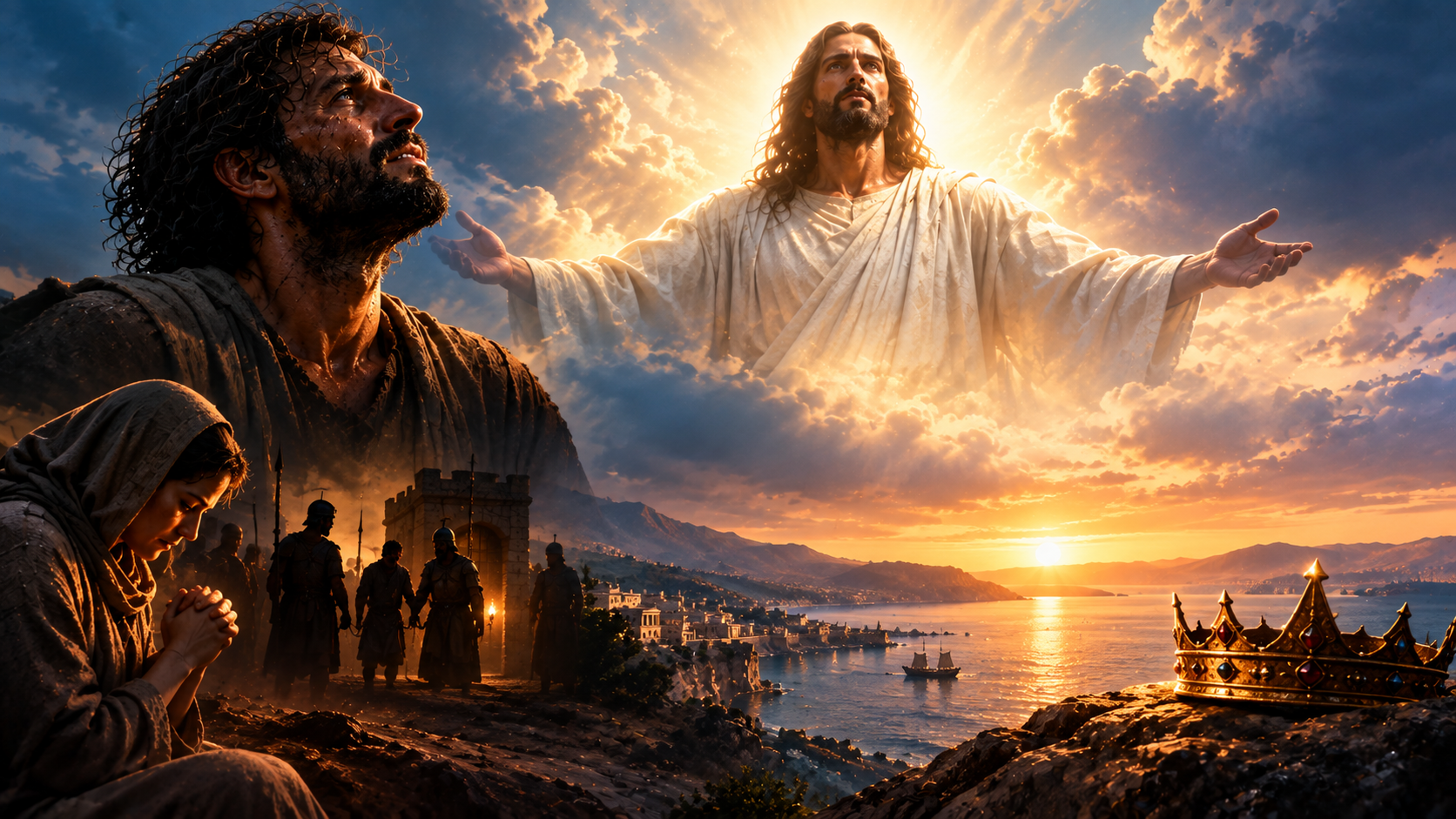
Philippians 2:5–10 contains one of the richest portraits of Christ’s person and work in all of Scripture, often recognized as an early Christian hymn that Paul incorporates to drive home his call for unity and humility in the church. Facing potential divisions in Philippi — a proud Roman colony where citizenship brought privilege and status — Paul points believers to the ultimate example: Jesus Christ, eternally God, who voluntarily laid aside the independent display of His divine glory to enter humanity as a servant, facing rejection, suffering, and the shameful death of crucifixion. This profound descent was not compelled but chosen out of obedience and love, resulting in the Father’s supreme exaltation of the Son, bestowing on Him the name above all names and ensuring that every created being will one day bow in acknowledgment of His sovereign lordship.
The passage reveals the heart of the gospel: God’s way of greatness runs downward through self-giving love before rising to glory. Believers are called to embody this same mindset, finding their unity not in grasping for position but in serving one another, confident that the God who exalted the humbled Christ will likewise honor those who follow His pattern. This truth brings deep encouragement, reminding us that no sacrifice for Christ’s sake is wasted and that present humility leads to future honor when all creation rightly worships Jesus as Lord.
Podcast Episode


Video Summary
Commentary
Philippians 2:5
Have this mind among yourselves, which is yours in Christ Jesus,
Paul issues a direct command here — using the present imperative in Greek (phroneite, to think or be minded) — calling believers to continually cultivate the same attitude that characterized Christ. This mindset is not a distant ideal but a present possession: it “is yours in Christ Jesus,” meaning union with Him grants access to His way of thinking through the indwelling Spirit shows this attitude looks like shared love, single-hearted purpose, and counting others more significant than oneself. Christ’s coming actions in verses 6–8 define exactly what this mind looks like in practice: willing self-renouncement for the good of others. In a culture that exalted status, Paul turns everything upside down — true joy and unity flow from imitating the Savior who stooped lowest.
Philippians 2:6
who, though he was in the form of God, did not count equality with God a thing to be grasped,
Christ’s preexistence and full deity shine clearly here. The phrase “in the form of God” uses the Greek word morphē, which speaks of essential nature and outward expression that perfectly matches inner reality — Christ eternally possesses the very essence of God , Christ chose the opposite path. In perfect security of His divine identity, He freely released the independent exercise of His privileges, showing that true deity is marked by generous self-giving rather than grasping self-protection. This verse stands as a powerful affirmation of Christ’s undiminished deity while preparing us for the astonishing humility that follows.
Philippians 2:7
but emptied himself, by taking the form of a servant, being born in the likeness of men.
The heart of the incarnation appears in the famous “kenosis” — Christ “emptied himself” (Greek ekenōsen). Conservative understanding holds that He did not subtract or abandon His deity but voluntarily veiled its glory and added full humanity, choosing not to exercise certain divine prerogatives independently. This emptying was an addition, not a subtraction: He took “the form of a servant” (again morphē of a doulos — a bondslave) and entered history “in the likeness of men” (Greek homoiōmati, indicating genuine humanity without sin). He who deserved endless worship accepted the limitations, vulnerabilities, and lowliness of human existence, born in obscurity to ordinary parents in a conquered nation. The language echoes the Suffering Servant of Isaiah , whom Israel expected as a conquering king but who came as One who served and gave His life. This voluntary descent displays love beyond comprehension: the infinite God willingly embraced finitude so that finite creatures might share His life.
Philippians 2:8
And being found in human form, he humbled himself by becoming obedient to the point of death, even death on a cross.
Having taken on true humanity (“in human form,” Greek schēmati emphasizing outward appearance and condition), Christ continued His downward path through active obedience. He “humbled himself” (Greek etapeinōsen) by submitting perfectly to the Father’s will, even when that will led to the ultimate horror: death on a Roman cross. Crucifixion was the most degrading execution reserved for slaves and rebels, considered cursed under Jewish law . Here we see the full measure of humility: not merely accepting low status but choosing the lowest possible end for the sake of redemption.
Philippians 2:9
Therefore God has highly exalted him and bestowed on him the name that is above every name,
Because of Christ’s perfect obedience in humiliation, the Father responds with super-exaltation (Greek hyperypsōsen, a compound intensifying exaltation). God freely bestows “the name that is above every name” — not merely the title “Jesus” but the full revelation of divine authority and lordship inherent in that name. This echoes Old Testament promises where the Servant, after suffering, is highly exalted . What Christ voluntarily laid aside in appearance, the Father now openly declares to the universe: Jesus possesses supreme authority over all powers, seen and unseen. Humiliation becomes the pathway to highest honor, proving that God’s economy reverses human expectations — those who lose their lives for His sake find them exalted.
Philippians 2:10
so that at the name of Jesus every knee should bow, in heaven and on earth and under the earth,
The purpose of Christ’s exalted name is universal homage: every knee will bow willingly or unwillingly. The language directly quotes Isaiah’s declaration about Yahweh . One day the entire created order will acknowledge Jesus’ lordship — some in joyful submission, others in forced recognition of defeated rebellion. This future certainty encourages suffering believers: the One who was despised and crucified now reigns, and every opposing power will finally bend before Him. The cross, once a symbol of shame, becomes the throne from which Christ’s universal sovereignty is displayed, bringing ultimate glory to God the Father.


Leave a Reply