

These carefully selected passages from the Gospels paint a vivid picture of the kingdom of God (called the kingdom of heaven in Matthew). Jesus reveals its supreme priority over every earthly concern, its priceless worth that demands total surrender, its quiet yet unstoppable growth in the present age even while mixed with evil, the absolute necessity of spiritual rebirth to enter it, and its distinctly spiritual nature—not a worldly empire advanced by force. Through direct teaching and parables drawn from everyday life in first-century Galilee and Judea, the Lord shows that the kingdom is both a present reality for those who receive it and a future hope awaiting final separation and victory. Scripture everywhere confirms this: the kingdom is God’s sovereign rule breaking into human history through Christ, calling us to live under His reign now while trusting Him completely for tomorrow.
In these verses we discover the heart of discipleship—seeking the King above all, valuing His rule so highly that nothing else competes, and recognizing that only the Spirit’s regenerating work can make us citizens of this kingdom. The parables especially unfold what Jesus called the “mysteries” of the kingdom: its humble beginnings, its hidden treasure-like value, its patient growth amid opposition, and the coming day when angels will sort the righteous from the wicked at the harvest. This is no distant future dream; it is the present call to radical allegiance, echoed throughout the New Testament as God transfers believers “from the domain of darkness” into “the kingdom of his beloved Son” (Colossians 1:13).
Podcast Episode


Video Summary
Commentary
Matthew 6:33
“But seek first the kingdom of God and his righteousness, and all these things will be added to you.”
Jesus has just finished painting pictures of carefree birds and lilies to drive home the folly of anxiety. Now He gives the positive command that frees the heart: make the kingdom your first and highest pursuit. The Greek word for “seek” is God’s royal rule—His reign over hearts and lives right now. In the Jewish world of Roman-occupied Galilee (a region roughly 60 kilometres north of Jerusalem), people longed for a political Messiah to throw off the empire; Jesus redirects that longing to a far greater reality. Cross-referencing Romans 14:17, the kingdom is “righteousness and peace and joy in the Holy Spirit.” When we chase God’s rule and the righteousness that comes only through Christ, the Father who feeds sparrows and clothes wildflowers promises to supply every need. This is not a formula for laziness but the secret to freedom from worry: order your life around the King, and He orders everything else for your good.
Matthew 13:24-30
“He put another parable before them, saying, ‘The kingdom of heaven may be compared to a man who sowed good seed in his field, but while his men were sleeping, his enemy came and sowed weeds among the wheat and went away. So when the plants came up and bore grain, then the weeds appeared also. And the servants of the master of the house came and said to him, “Master, did you not sow good seed in your field? How then does it have weeds?” He said to them, “An enemy has done this.” So the servants said to him, “Then do you want us to go and gather them?” But he said, “No, lest in gathering the weeds you root up the wheat along with them. Let both grow together until the harvest, and at harvest time I will tell the reapers, ‘Gather the weeds first and bind them in bundles to be burned, but gather the wheat into my barn.’”
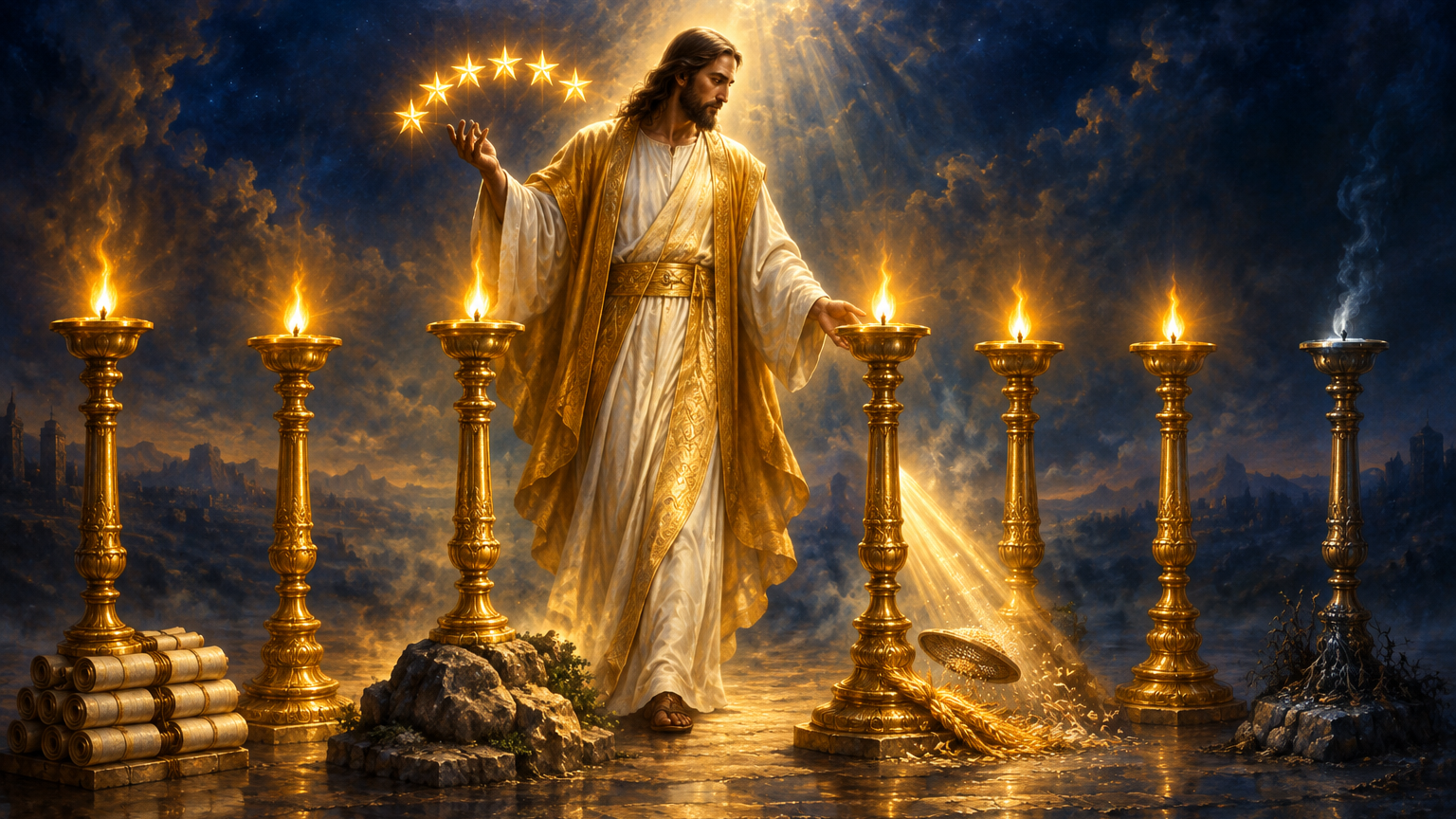
Jesus pictures the present form of the kingdom as a field where an enemy has secretly sown poisonous darnel (zizania in Greek, a weed that looks identical to wheat until harvest). In first-century Jewish farming, this was a known sabotage tactic—fields were vulnerable at night, and darnel’s roots tangled so tightly with wheat that early weeding would destroy the crop. The master’s patience teaches us that the kingdom in this age is mixed: true sons of the kingdom grow alongside sons of the evil one until the final harvest. Jesus later explains the field is the world (v. 38), the good seed the children of the kingdom, the weeds the children of the devil. Cross-referencing 2 Thessalonians 2:7, the mystery of lawlessness is already at work, yet God restrains premature judgment so that not one genuine believer is lost. The comfort for every believer facing false professors in the visible church or evil in society is this: the King sees everything, and at the end the angels will do the separating. Until then, we live as wheat among weeds—shining as lights without trying to pull up what only the Lord can judge.
Matthew 13:44
“The kingdom of heaven is like treasure hidden in a field, which a man found and covered up. Then in his joy he goes and sells all that he has and buys that field.”
Buried treasure was common in unstable Judea; with no banks, families hid valuables in fields during times of invasion or unrest. The man stumbles upon it, covers it again in breathless excitement, then liquidates everything to own the field. The joy is the key—his sacrifice flows from delight, not duty. This is the kingdom: hidden in plain sight yet worth every earthly possession. Cross-referencing Philippians 3:8, Paul says he suffered the loss of all things for the surpassing worth of knowing Christ. In a culture that prized land inheritance, Jesus says the kingdom is the ultimate inheritance. The man does not negotiate or keep a safety net; he sells all because he has found something infinitely better.
Matthew 13:45-46
“Again, the kingdom of heaven is like a merchant in search of fine pearls, who, on finding one pearl of great value, went and sold all that he had and bought it.”
Unlike the accidental finder of treasure, this merchant is a professional seeker of the rarest pearls—highly prized in the ancient world, often worth more than gold and imported from distant waters. When he finds the one flawless pearl, he instantly sells his entire inventory. The kingdom is not only stumbled upon; it is eagerly pursued by those whose eyes are trained to recognize its beauty. The same total sale occurs, but now with the added weight of lifelong expertise. Cross-referencing Matthew 13:44, the two parables together show that whether we come to the kingdom suddenly or after long searching, the response is identical: everything goes because nothing compares. In Jewish tradition, pearls symbolized ultimate value; Jesus lifts that image to heaven itself.
Matthew 13:47-50
“Again, the kingdom of heaven is like a net that was thrown into the sea and gathered fish of every kind. When it was full, men drew it ashore and sat down and sorted the good into containers but threw away the bad. So it will be at the end of the age. The angels will come out and separate the evil from the righteous and throw them into the fiery furnace. In that place there will be weeping and gnashing of teeth.”
The Sea of Galilee (about 21 kilometres long and 13 kilometres wide) was fished with large dragnets sometimes hundreds of metres long that swept up everything in their path. Sorting happened on shore—edible fish kept, unclean or worthless thrown away. The kingdom in this age is like that net: the gospel draws in people of every kind, but only at the end of the age will angels sort the righteous from the evil. The “fiery furnace” echoes Old Testament judgment language (Daniel 3; Malachi 4:1). Cross-referencing Revelation 20:11-15, this final separation is certain. The warning is solemn: profession of faith does not equal possession; only those made righteous by the King will be kept.
John 18:36
“Jesus answered, ‘My kingdom is not of this world. If my kingdom were of this world, my servants would have been fighting, that I might not be delivered over to the Jews. But my kingdom is not from the world.’”
Standing before Pilate in the Roman praetorium, Jesus clarifies the nature of His rule. The Greek phrase “not of this world” means it does not originate from or operate by the principles of earthly power. In Jewish expectation, the Messiah would lead armies; Jesus’ servants do not fight because His kingdom advances by the sword of the Spirit, not steel. Cross-referencing Colossians 1:13 and 1 Peter 2:9, the kingdom is a spiritual realm of light and priesthood. This truth frees the church from political violence while calling us to bold witness—our King reigns, but not like Caesar.
John 3:3
“Jesus answered him, ‘Truly, truly, I say to you, unless one is born again he cannot see the kingdom of God.’”
To Nicodemus, a respected teacher, Jesus drops the bombshell: natural birth is not enough. “Born again” translates the Greek anōthen, meaning both “again” and “from above”—a sovereign work of God. Without this spiritual rebirth, no one can even see the kingdom. Cross-referencing Ezekiel 36:26-27, God promised to give a new heart and put His Spirit within. The kingdom is not entered by religious effort or heritage; it is seen only by those made alive by the Spirit.
John 3:5
“Jesus answered, ‘Truly, truly, I say to you, unless one is born of water and the Spirit, he cannot enter the kingdom of God.’”
Jesus repeats and expands: “water and the Spirit” likely echoes Ezekiel 36:25-27 (cleansing water followed by the Spirit) and contrasts natural birth (“born of the flesh is flesh,” v. 6). Entry into the kingdom requires this divine regeneration. Cross-referencing Titus 3:5, it is “the washing of regeneration and renewal of the Holy Spirit.” No one strolls into God’s kingdom; we are born into it by the Spirit’s miracle.
Luke 13:20-21
“And again he said, ‘To what shall I compare the kingdom of God? It is like leaven that a woman took and hid in three measures of flour, until it was all leavened.’”
Three measures of flour (roughly 40 litres) would make bread for a small village—a massive batch. The woman hides the leaven, and silently, powerfully, it permeates everything. The kingdom works the same way: small, hidden, yet unstoppable in its transforming influence. In Jewish baking, leaven pictured pervasive change; Jesus uses it to show the quiet, internal growth of God’s rule in hearts and history. Cross-referencing Matthew 13:33, the parable pairs with the mustard seed to comfort disciples that the kingdom will fill the earth despite humble beginnings.



Leave a Reply