
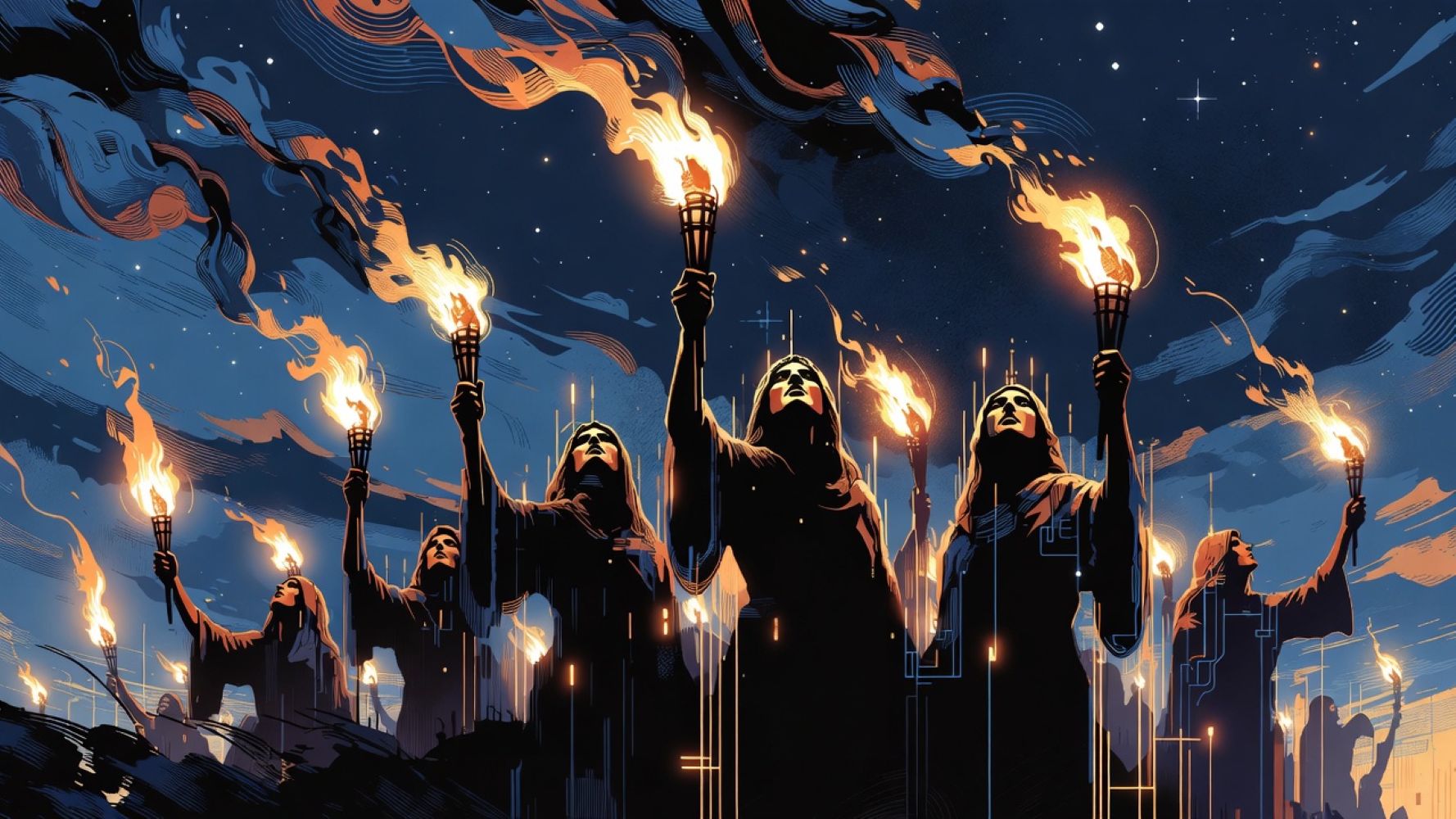
Matthew 25:1–13 records Jesus’ Parable of the Ten Virgins, spoken on the Mount of Olives during Passion Week as part of His teaching on the sudden and certain return of the Son of Man. The story uses the familiar setting of a first-century Jewish wedding to illustrate the necessity of personal, enduring readiness for the coming kingdom of heaven. Ten young women wait to join the bridegroom’s procession, but only five have prepared adequately with reserve oil for their torches. When the bridegroom arrives unexpectedly at midnight, the prepared enter the feast while the unprepared are excluded forever. The closing exhortation — “Watch therefore” — calls every hearer to live in constant spiritual alertness, for no one knows the day or hour of Christ’s return.
In Jewish wedding practice of the time, after betrothal the bridegroom would come — often at night and after deliberate delay — to claim his bride from her father’s house. Friends and bridesmaids gathered with lighted torches to form a joyous procession back to the groom’s home, where the marriage was consummated and a festive banquet lasting several days began. Once the procession reached the house and the guests entered, the doors were closed and guarded; late arrivals, even expected ones, were refused entry to preserve the joy and order of the celebration. This vivid cultural picture underscores the parable’s warning: the return of Christ will be glorious yet irreversible, and only those truly prepared through genuine faith will share in the eternal wedding feast.
Podcast Episode


Video Summary
Commentary
Matthew 25:1
“Then the kingdom of heaven will be like ten virgins who took their lamps and went to meet the bridegroom.”
Jesus links this parable directly to the preceding teaching about His sudden return by beginning with “Then.” The “kingdom of heaven” here points to the future, visible coming of Christ when He establishes His reign. The ten virgins represent those who outwardly profess to belong to God’s people and await the Messiah. In Jewish weddings, these young women — close friends of the bride — gathered at the bride’s home with torches ready to escort the groom when he arrived. The Greek word for “virgins” were actually torches of cloth wrapped around wood and soaked in oil, requiring generous supply to burn brightly through the night. All ten appear identical at the start, teaching that external association with the church or profession of faith is insufficient; true readiness is an inner reality known only when tested.
Matthew 25:2
“Five of them were foolish, and five were wise.”
The equal division into five wise and five foolish reveals that within the visible community of those awaiting Christ, a profound spiritual distinction exists. The Greek term for “wise” . Jewish hearers would recognize this contrast from wisdom literature. The equal numbers emphasize that nominal Christianity can be widespread, yet only genuine, Spirit-filled faith endures to the end.
Matthew 25:3
“For when the foolish took their lamps, they took no oil with them,”
The foolishness becomes evident in lack of preparation. The foolish virgins carry torches but bring no reserve oil, assuming the bridegroom will arrive promptly. In actual weddings, torches needed frequent re-soaking with oil; without extra supply they quickly dimmed and died. Oil throughout Scripture pictures the Holy Spirit’s presence and power . The foolish possess only an outward form — perhaps initial enthusiasm or religious activity — but lack the indwelling Spirit that sustains true faith through delay and trial.
Matthew 25:4
“but the wise took flasks of oil with their lamps.”
In contrast, the wise bring flasks — small clay vessels holding additional oil — demonstrating foresight and diligence. Jewish bridesmaids knew delays were customary; wise ones planned accordingly. This extra oil symbolizes the abiding presence of the Holy Spirit received through genuine repentance and faith, producing enduring light and fruit . Conservative teachers note that true believers are marked by ongoing dependence on the Spirit, not merely past experience or outward appearance.
Matthew 25:5
“As the bridegroom was delayed, they all became drowsy and slept.”
Delays were intentional in some Jewish weddings — the groom might linger to heighten anticipation or complete final arrangements — testing the readiness of all involved. Both wise and foolish grow drowsy and sleep, showing that sleep itself is not sinful; even faithful believers rest while awaiting Christ’s return. The critical difference lies in preparation for awakening. The long delay since Christ’s ascension similarly tests the church , separating those sustained by the Spirit from those whose light eventually fails.
Matthew 25:6
“But at midnight there was a cry, ‘Here is the bridegroom! Come out to meet him.’”
The bridegroom’s arrival at midnight — the deepest, darkest hour — mirrors the unexpected timing of Christ’s return “like a thief” . Once this cry sounds, preparation time ends forever.
Matthew 25:7
“Then all those virgins rose and trimmed their lamps.”
All ten respond immediately, rising and trimming (adjusting wicks and adding oil if available). Outwardly they still look alike, but the moment of testing reveals the heart. Jewish torches required careful trimming to burn steadily; the wise are ready instantly, while the foolish discover their fatal deficiency. This illustrates how crisis exposes reality — profession without possession proves empty.
Matthew 25:8
“And the foolish said to the wise, ‘Give us some of your oil, for our lamps are going out.’”
Panic sets in as the foolish see their torches flickering (“are going out” is present tense in Greek — progressive extinction). They beg for oil, but genuine faith and the Spirit’s anointing cannot be transferred . Each person must personally trust Christ; no one enters the kingdom on borrowed righteousness.
Matthew 25:9
“But the wise answered, saying, ‘Since there will not be enough for us and for you, go rather to the dealers and buy for yourselves.’”
The wise refuse not from cruelty but necessity — sharing would extinguish every torch, dishonoring the groom. They urge the foolish to buy, echoing Isaiah’s invitation , yet the hour is now too late. In the parable’s imagery, grace has its appointed season; once the bridegroom arrives, the market is closed.
Matthew 25:10
“And while they were going to buy, the bridegroom came, and those who were ready went in with him to the marriage feast, and the door was shut.”
While the foolish are absent, the groom arrives. The prepared enter immediately into the banquet hall — a picture of the marriage supper of the Lamb . In Jewish custom, once the wedding party entered the groom’s house, the doors were firmly closed and often guarded; latecomers, even known guests, were denied to maintain the celebration’s sanctity and security. The shut door signifies finality — no further opportunity remains.
Matthew 25:11
“Afterward the other virgins came also, saying, ‘Lord, lord, open to us.’”
The foolish return and plead desperately, addressing the groom as “Lord, lord” — words Jesus elsewhere warns will not save without true obedience . Their exclusion, though tragic, is just; they had the same opportunity yet chose unpreparedness.
Matthew 25:12
“But he answered, ‘Truly, I say to you, I do not know you.’”
The bridegroom’s solemn reply uses the Greek ginōskō in its deepest sense — intimate, covenant relationship. He does not merely fail to recognize them; He never knew them in saving fellowship. Outward profession without inward reality leaves one unknown to Christ at the final day.
Matthew 25:13
“Watch therefore, for you know neither the day nor the hour.”
Jesus drives home the application: “Watch” . Readiness is not last-minute frenzy but daily walking in repentance, faith, and expectation of Christ’s return. The parable ends with urgent, loving warning: today is the day to secure the oil that never runs out.



Leave a Reply