
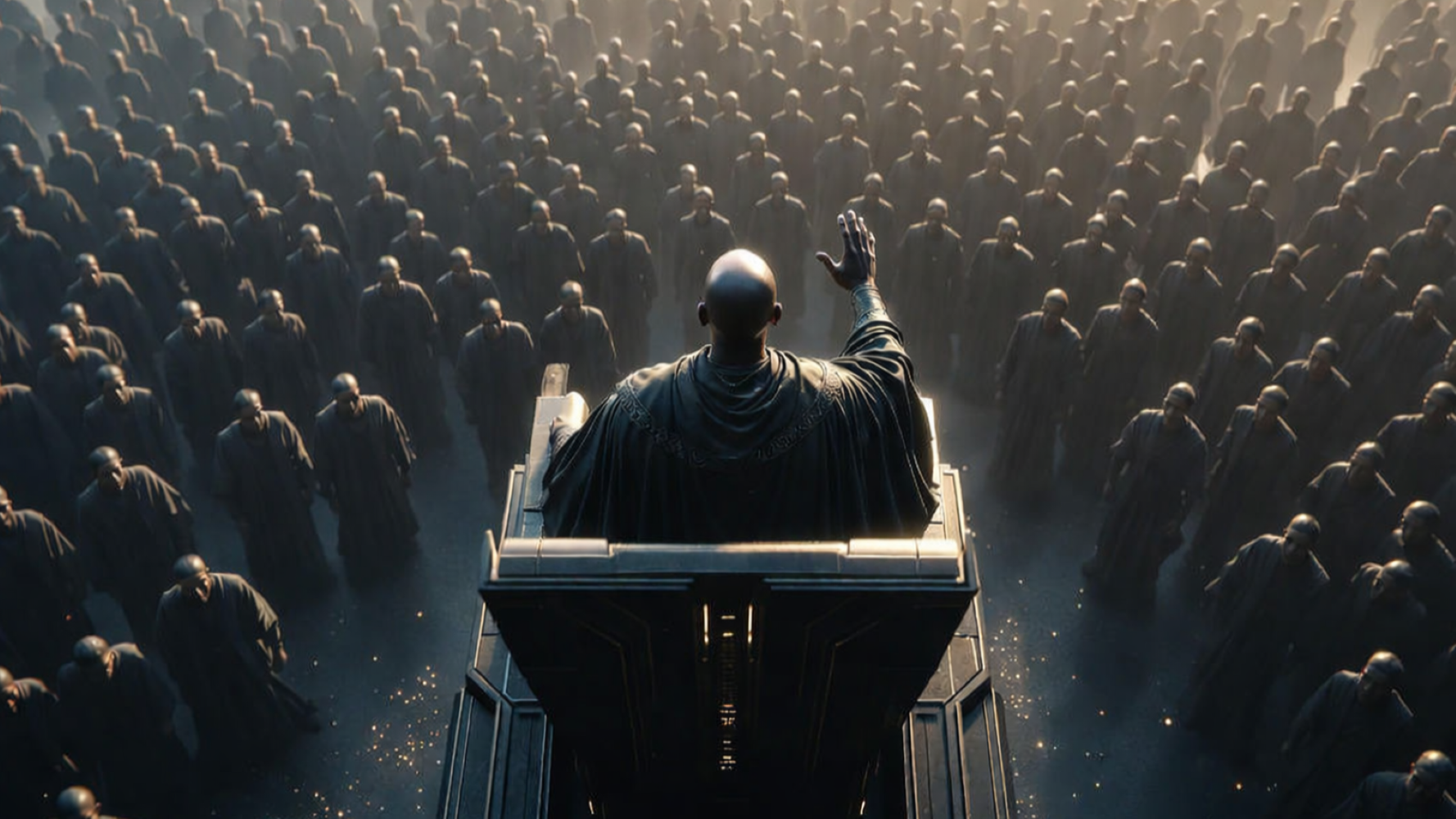
In this powerful section of Paul’s second letter to the Thessalonian believers, he gently corrects a troubling falsehood that had shaken the young church. False reports—whether through supposed spiritual messages, spoken claims, or even a forged letter presented as coming from Paul—had convinced some that the day of the Lord had already arrived, leaving them fearful they had missed the glorious gathering to Christ. Paul reassures them by reminding them of the clear sequence of events he taught them in person: the day of the Lord cannot come until a great rebellion against God takes place and the man of lawlessness is revealed.
This future figure, empowered by Satan with deceptive signs and wonders, will commit the ultimate blasphemy by seating himself in God’s temple and declaring himself divine. Yet a restraining power currently holds him back until God’s perfect timing. Paul unveils how Satan’s activity is already at work in subtle ways, but the lawless one’s reign will end instantly when the Lord Jesus returns. Those who reject the truth will be given over to a strong delusion as judgment, while the believers are reminded of God’s electing love that has chosen them for salvation through the Spirit’s sanctifying work and belief in the gospel.
The passage is a profound anchor of hope: evil is real and deceptive, but it is temporary, restrained by God, and doomed to defeat. Believers are called to stand firm in truth rather than fear.
Podcast Episodes


Video Summary
Commentary
2 Thessalonians 2:1
“Now concerning the coming of our Lord Jesus Christ and our being gathered together to him, we ask you, brothers,”
Paul opens with tender pastoral care, using the Greek word parousia for “coming,” which carries the rich meaning of an official royal arrival filled with presence and power—not a distant event but the personal, triumphant return of the King. He pairs it with episunagōgē, the gathering together, echoing the same hope he gave in 1 Thessalonians 4:16–17 where the dead in Christ rise first and the living are caught up to meet the Lord in the air. In the Jewish world of the first century, believers would have understood this as the ultimate fulfillment of God’s promise to assemble His scattered people, far greater than any earthly festival gathering. Paul’s gentle plea (“we ask you”) shows his heart—he does not scold but lovingly steadies their shaken faith, reminding them that the Lord’s return is something to long for with confident hope, not dread. This sets the tone for the whole passage: the true parousia will be unmistakable, and until then, hold fast to what you were taught.
2 Thessalonians 2:2
“not to be quickly shaken in mind or alarmed, either by a spirit or a spoken word, or a letter seeming to be from us, to the effect that the day of the Lord has come.”
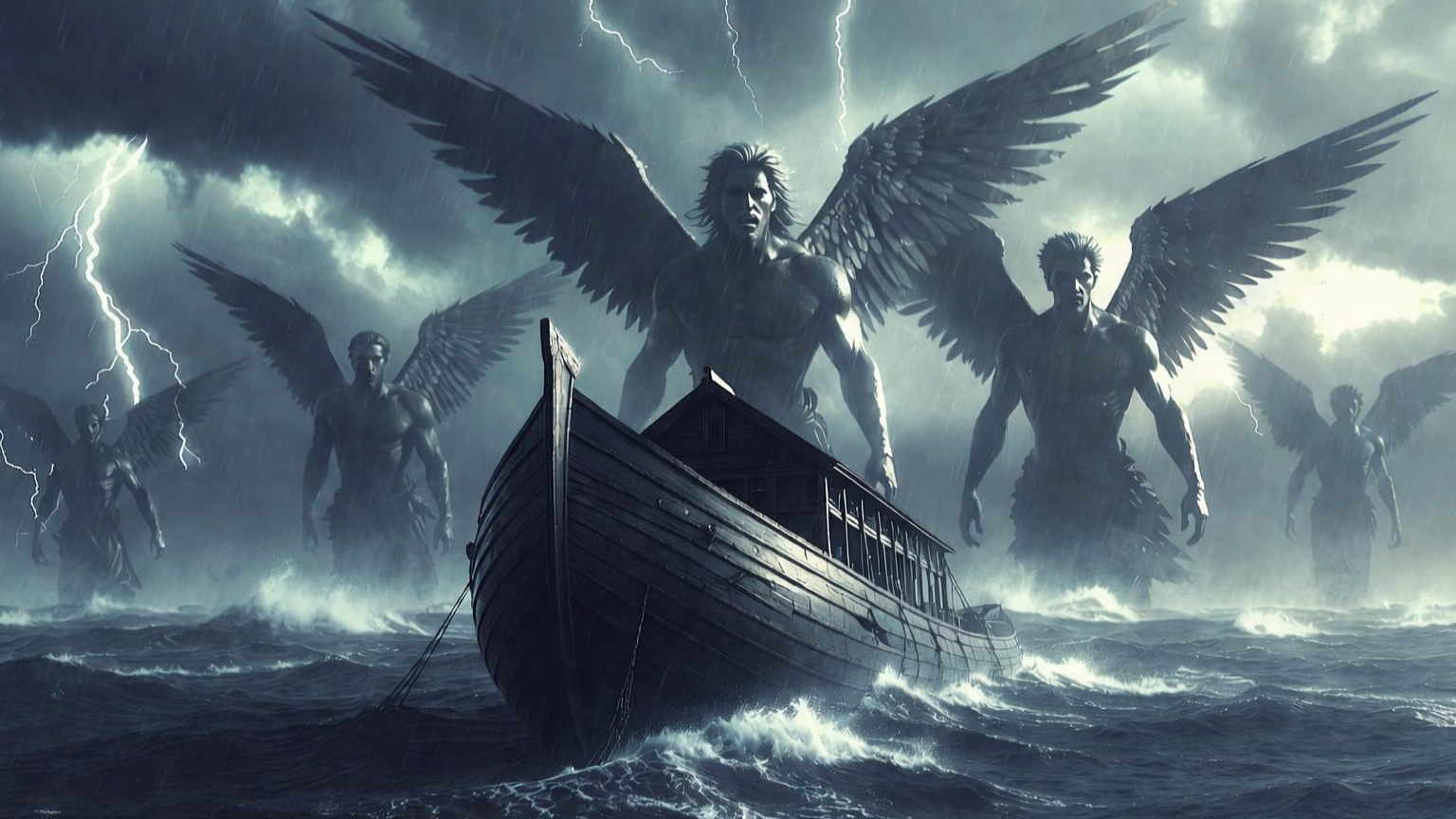
Here Paul exposes the source of their turmoil—deceptive influences that could come through supposed spiritual revelations, oral teachings, or even counterfeit letters claiming apostolic authority. The phrase “quickly shaken” pictures a ship tossed violently in a storm, and “alarmed” carries the idea of sudden panic. In the ancient world, forged letters were a real danger, much like today’s fake news that spreads fear. Yet Paul’s instruction is clear: do not let any voice, even one claiming spiritual power, override the truth he delivered in person. This verse guards the church against deception by anchoring everything to the original apostolic teaching. Cross-referencing 1 Thessalonians 5:21, we are to test everything and hold fast to what is good. The comfort is profound—God has not left us vulnerable; He has given us His sure Word so our minds stay steady even when false winds blow.
2 Thessalonians 2:3
“Let no one deceive you in any way. For that day will not come, unless the rebellion comes first, and the man of lawlessness is revealed, the son of destruction,”
Paul issues a strong warning against any form of deception and then lays out two unmistakable prerequisites: the apostasia—a definite, massive falling away—and the revelation of the man of lawlessness. The Greek apostasia means a deliberate defection or abandonment, not a gradual drift but a widespread, open revolt against God’s truth, echoing Daniel 8:23 and 1 Timothy 4:1. The “man of lawlessness” (literally “man of anomias”) is a real future person, not a system or idea, whose very nature is opposition to God’s law. He is also called “son of destruction,” a Hebrew idiom meaning one destined for eternal ruin, yet temporarily allowed to rise. In Jewish understanding, this echoes the ultimate “abomination of desolation” prophesied by Daniel, where evil reaches its peak before God intervenes. The insight here is breathtaking: evil will not win by surprise; its full exposure is part of God’s sovereign timetable, giving believers rock-solid confidence that the day of the Lord has not yet come.
2 Thessalonians 2:4
“who opposes and exalts himself against every so-called god or object of worship, so that he takes his seat in the temple of God, proclaiming himself to be God.”
This verse unveils the man of lawlessness’s supreme blasphemy: he will seat himself in the inner sanctuary (naos) of God’s temple and declare “I am God.” The language directly echoes Daniel 11:36 and the abomination of desolation Jesus warned about in Matthew 24:15. In first-century Jewish thought, the temple was the very dwelling place of God’s presence; for a man to claim that space was the height of defiance. Many conservative students of Scripture see this pointing to a literal future temple in Jerusalem, located about 1,600 kilometers southeast of ancient Thessalonica. The depth of insight is this: Satan’s counterfeit always mimics God’s reality. Just as Christ is God in the flesh, this figure will be Satan’s ultimate imitation—yet his self-exaltation only proves how completely he is under God’s sovereign hand. Believers are not to fear this coming spectacle; we are to recognize it as the final sign that Christ’s return is near.
2 Thessalonians 2:5
“Do you not remember that when I was still with you I told you these things?”
Paul’s gentle reminder carries pastoral wisdom: he had already taught them this sequence face-to-face. In the early church, oral teaching from apostles was treasured as authoritative. This verse gently rebukes any forgetfulness while affirming that God’s people are not left in the dark. The insight here is tender—truth remembered is truth that stabilizes. In times of confusion, the Spirit brings to mind what we were taught, just as Jesus promised in John 14:26. For us today, it calls us back to the Scriptures we have heard and studied: the same apostolic truth that steadied the Thessalonians still anchors our hearts when false voices arise.
2 Thessalonians 2:6
“And you know what is restraining him now so that he may be revealed at the proper time.”
The restraining force is something the believers already understood from Paul’s earlier teaching. The Greek word katechō means to hold down or restrain with power. Conservative understanding sees this restrainer as possibly the Holy Spirit working through His presence in the world, or a powerful angel such as Michael who is described in Daniel as standing up to restrain evil forces. This reveals God’s perfect timing: nothing happens a second too soon or too late. The comfort is immense—evil is not running wild; it is on a leash held by a holy God who loves His people. Scripture does not connect the removal of this restrainer to the rapture of the church.
2 Thessalonians 2:7
“For the mystery of lawlessness is already at work. Only he who now restrains it will do so until he is out of the way.”
Even now, in Paul’s day and ours, the “mystery of lawlessness” is secretly operating—subtle rebellion against God’s order. Yet the restrainer (the same powerful “he” of verse 6) continues until the moment God removes His restraining hand. The insight here is sobering and hopeful: we see lawlessness increasing around us, but it is still restrained. When that restraint is lifted, the full revelation will come. This mystery will one day be fully exposed, but only when God says “now.”
2 Thessalonians 2:8
“And then the lawless one will be revealed, whom the Lord Jesus will kill with the breath of his mouth and bring to nothing by the appearance of his coming.”
The moment the restrainer steps aside, the lawless one appears—but his doom is immediate and total. Jesus will destroy him with the breath of His mouth, a direct quotation from Isaiah 11:4. One spoken word from the King of kings ends the reign of evil. The Greek epiphaneia of His coming pictures a brilliant, visible appearing that obliterates darkness. What a gem of theology: the same breath that created the universe will uncreate every work of Satan in an instant. No battle, no struggle—simply the appearing of Christ brings total victory.
2 Thessalonians 2:9
“The coming of the lawless one is by the activity of Satan with all power and false signs and wonders,”
Satan will energize this figure with his own energeia—powerful working—complete with counterfeit miracles. These are not tricks but real supernatural displays designed to deceive. Jesus warned of the same in Matthew 24:24. The insight is clear: Satan is a counterfeiter, not a creator. His power is real but limited and always aimed at destruction. Believers are not to be impressed or afraid; we test everything by the truth of God’s Word.
2 Thessalonians 2:10
“and with all wicked deception for those who are perishing, because they refused to love the truth and so be saved.”
The deception targets those already perishing because they rejected love for the truth. This is not innocent ignorance but willful refusal. The Greek emphasizes “pleasure in unrighteousness” later, showing their hearts were set against God. Here we see the tragedy of free choice—God offers salvation freely, but when hearts love lies more than truth, deception finds a welcome home. The comfort for believers is the opposite: we have loved the truth and been saved.
2 Thessalonians 2:11
“Therefore God sends them a strong delusion, so that they may believe what is false,”
As judgment, God actively sends a powerful delusion so they believe the lie. This is not God causing sin but giving them exactly what their hearts chose. The insight is awe-inspiring: even in judgment, God remains sovereign. He turns their own rejection into the instrument of their condemnation, fulfilling His righteous purposes while protecting His elect.
2 Thessalonians 2:12
“in order that all may be condemned who did not believe the truth but had pleasure in unrighteousness.”
The purpose is clear—condemnation falls on those who took pleasure in evil rather than truth. This verse echoes Romans 1:24–28 where God gives people over to their desires. Yet in the very next verse, the tone shifts to joy for the chosen. The contrast is stark: judgment for the pleasure-seekers of unrighteousness, salvation for those who love truth.
2 Thessalonians 2:13
“But we ought always to give thanks to God for you, brothers beloved by the Lord, because God chose you as the firstfruits to be saved, through sanctification by the Spirit and belief in the truth.”
Paul bursts into thanksgiving, turning from warning to worship. The believers are “beloved by the Lord,” chosen from the beginning as firstfruits—a Jewish image of the very best offered to God. Salvation comes through two inseparable works: the Spirit’s hagiasmos (sanctification, making us holy) and our belief in the truth. This is election at its most comforting—God’s initiative, the Spirit’s power, and our faith all working together. In a passage filled with sobering warnings, this verse floods the heart with assurance: if you love the truth and believe, you are safe forever in the Father’s electing love.
This entire chapter calls us to live with eyes fixed on Christ’s soon return, hearts guarded by truth, and mouths full of thanks for the salvation that cannot be shaken.


Leave a Reply