
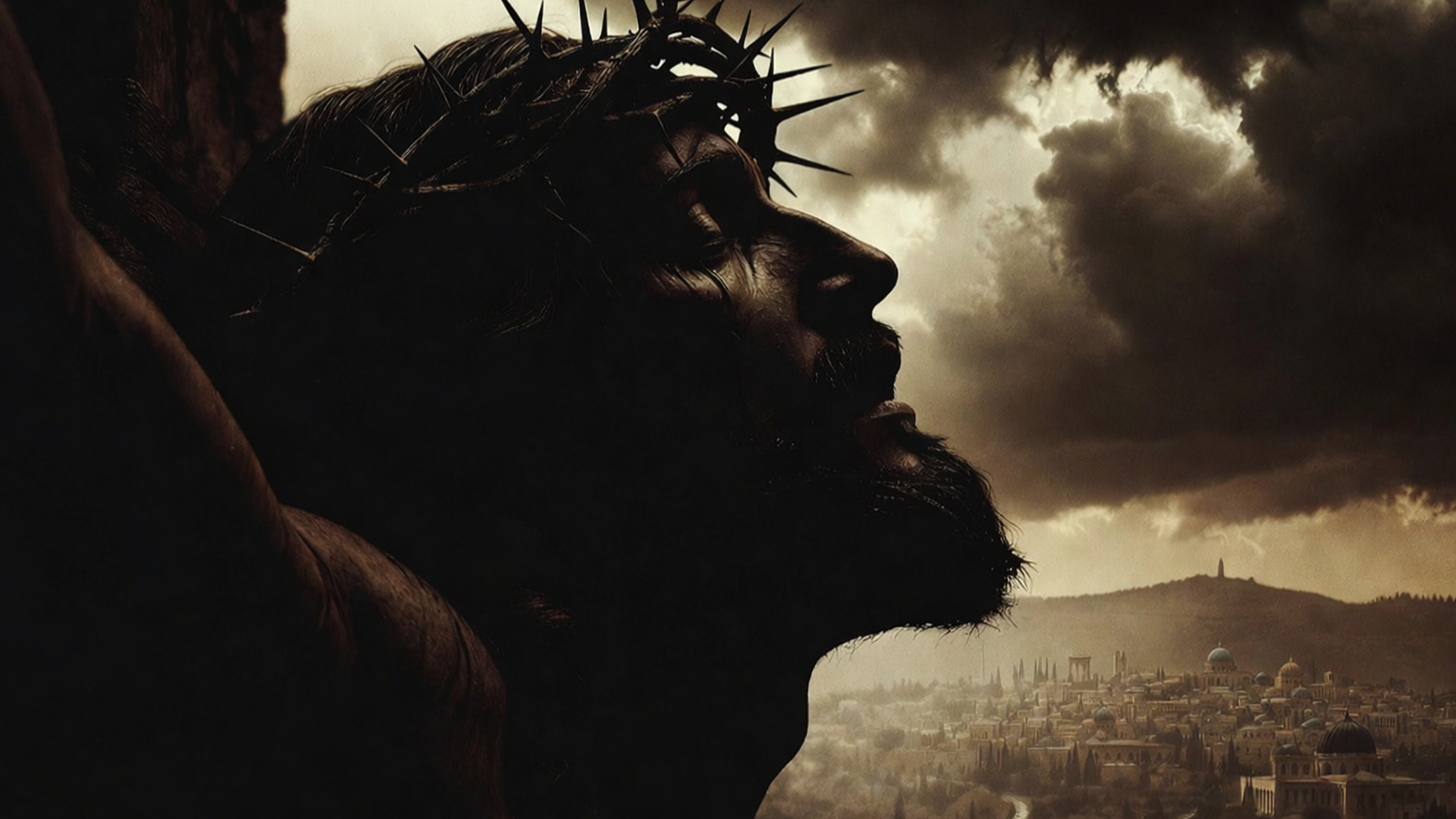
Psalm 22 is one of the most profound messianic psalms, written by David yet reaching far beyond his own experience to describe the suffering and death of Jesus Christ on the cross with startling precision. The selected verses capture the deepest agony of the sufferer: a cry of apparent abandonment by God, public mockery from onlookers, extreme physical torment resembling crucifixion, and the final indignity of enemies gambling for his clothes. Centuries before crucifixion was invented as a form of execution, these details point unmistakably to the Passion of the Messiah, revealing God’s sovereign plan to redeem His people through the substitutionary death of His Son. Conservative interpreters consistently see this psalm as prophetic Scripture, fulfilled verbatim in the Gospel accounts, demonstrating that Christ willingly entered into the fullest experience of human despair and divine judgment so that sinners might be reconciled to God.
Podcast Episode


Video Summary
Commentary
Psalm 22:1
My God, my God, why have you forsaken me? Why are you so far from saving me, from the words of my groaning?
This opening cry is the most heart-wrenching expression of spiritual anguish in all of Scripture. David felt utterly abandoned in his trial, yet these exact words were quoted by the Lord Jesus Christ from the cross in Matthew 27:46 and Mark 15:34, revealing that the psalm is ultimately about the Messiah’s suffering. On the cross, Jesus was not abandoned in His divine nature—He and the Father remained eternally united—but He experienced the full horror of bearing the world’s sin, enduring the wrath that sinners deserve . The Hebrew verb translated “forsaken” is עָזַב (azav), meaning to leave, abandon, or loose—one who has been tightly held is suddenly released into isolation. When Jesus cried “Eli, Eli, lema sabachthani?” He identified completely with human despair while fulfilling prophecy, turning the darkest moment of separation into the means of eternal reconciliation. The groanings here echo the persistent, wordless prayers of the righteous sufferer, reminding believers that even when God seems silent, He is working the greatest salvation.
Psalm 22:7
All who see me mock me; they make mouths at me; they wag their heads;
The sufferer is now surrounded by contempt and derision. In ancient Jewish culture, wagging or shaking the head was a gesture of scorn and disbelief . The verse reveals the depth of human depravity—mocking the righteous in their lowest moment—while displaying divine patience and purpose.
Psalm 22:8
“He trusts in the Lord; let him deliver him; let him rescue him, for he delights in him!”
The mockers now quote the sufferer’s own faith back at him in cruel sarcasm, challenging God to act if the claim of divine favor is true. This exact taunt was hurled at Jesus on the cross . The irony is piercing: the mockers unwittingly speak truth. God does delight in His Son, yet in love He chooses not to deliver Him from the cross because the greater rescue is the salvation of many. This verse exposes the blindness of unbelief—those who demand signs miss the greatest sign of all: a Savior who dies in weakness to conquer sin and death.
Psalm 22:14
I am poured out like water, and all my bones are out of joint; my heart is like wax; it is melted within my breast;
The physical torment is described with vivid imagery of total collapse. Being “poured out like water” speaks of complete loss of strength and coherence, as if life itself is draining away. The dislocation of bones matches the effects of crucifixion, where the body is stretched and joints pulled apart. The heart melting like wax conveys overwhelming grief and shock, possibly even the medical reality of heart failure under extreme stress. These details, written centuries before Roman crucifixion existed, reveal divine foreknowledge. Jesus endured this very breakdown of body and soul so that believers might be made whole . The imagery reminds us that the Messiah did not suffer in a detached or merely symbolic way—He experienced the full horror of human frailty and pain in order to redeem both body and soul.
Psalm 22:15
My strength is dried up like a potsherd, and my tongue sticks to my jaws; you lay me in the dust of death.
Dehydration and exhaustion now dominate. A “potsherd” is a broken piece of baked clay—brittle, useless, scorched. The tongue clinging to the jaws is the agony of extreme thirst, fulfilled when Jesus said, “I thirst” so that He might destroy its power forever.
Psalm 22:16
For dogs encompass me; a company of evildoers encircles me; they have pierced my hands and feet—
“Dogs” was a common Jewish term of contempt for Gentiles or the ungodly , here portraying enemies as a pack closing in for the kill. The crucial phrase “they have pierced my hands and feet” translates the Hebrew כָּאֲרִי in most Masoretic manuscripts as “like a lion,” but ancient versions (Septuagint, Vulgate, Syriac) and some Hebrew manuscripts read כָּאֲרוּ from the verb “to dig/pierce.” Conservative scholarship widely accepts “pierced” as the correct reading, prophetically describing crucifixion—the piercing of hands and feet by nails. No such punishment existed in David’s time, making this a stunning prophecy fulfilled in Christ. The verse captures the isolation of the sufferer, surrounded yet utterly alone in bearing sin.
Psalm 22:18
They divide my garments among them, and for my clothing they cast lots.
The final indignity: even the sufferer’s few possessions are taken. Roman soldiers fulfilled this exactly by dividing Jesus’ garments and casting lots for His seamless tunic . This verse closes the selected portion on a note of total humiliation, setting the stage for the psalm’s later turn to triumphant praise and vindication.




Leave a Reply